From Facebook Orders to an Owned Online Store: A Growth Guide for Bangladesh

Facebook and other social channels are powerful places to discover products. But when every order depends on a manual inbox conversation, growth creates friction: replies slow down, product details become inconsistent, addresses are copied incorrectly, and the team loses visibility into why buyers disappear.
Moving to an owned online store does not mean abandoning social selling. It means giving interested buyers a dependable place to verify products and complete the next step while your team continues the conversation where customers already spend time.
Why inbox-only selling becomes difficult
At low volume, a seller can remember prices, delivery charges, and stock. At higher volume, memory becomes a fragile operating system.
Common warning signs include:
- different agents quoting different prices;
- unanswered messages during busy periods;
- repeated requests for the same product photos and size details;
- incomplete addresses and phone numbers;
- no clear record of which campaign or conversation produced an order;
- customers waiting for manual confirmation before they can proceed.
These problems are not solved by sending more messages. They are solved by creating a shared source of truth and a repeatable buying journey.
What an owned store adds
An owned store gives each product a stable destination with structured information. It can also provide checkout, order records, policy pages, campaign landing pages, and measurement that an inbox alone cannot.
Bangladeshi merchants evaluating local tools can review SellSull’s online store and landing-page platform, which describes support for local commerce workflows including cash on delivery, bKash, courier services, and fake-order checks. Confirm current plan limits, integrations, and operational fit directly with the provider before adopting it.
The platform is one part of the system. Your content and process still determine whether customers trust the journey.
Keep social channels as discovery and conversation layers
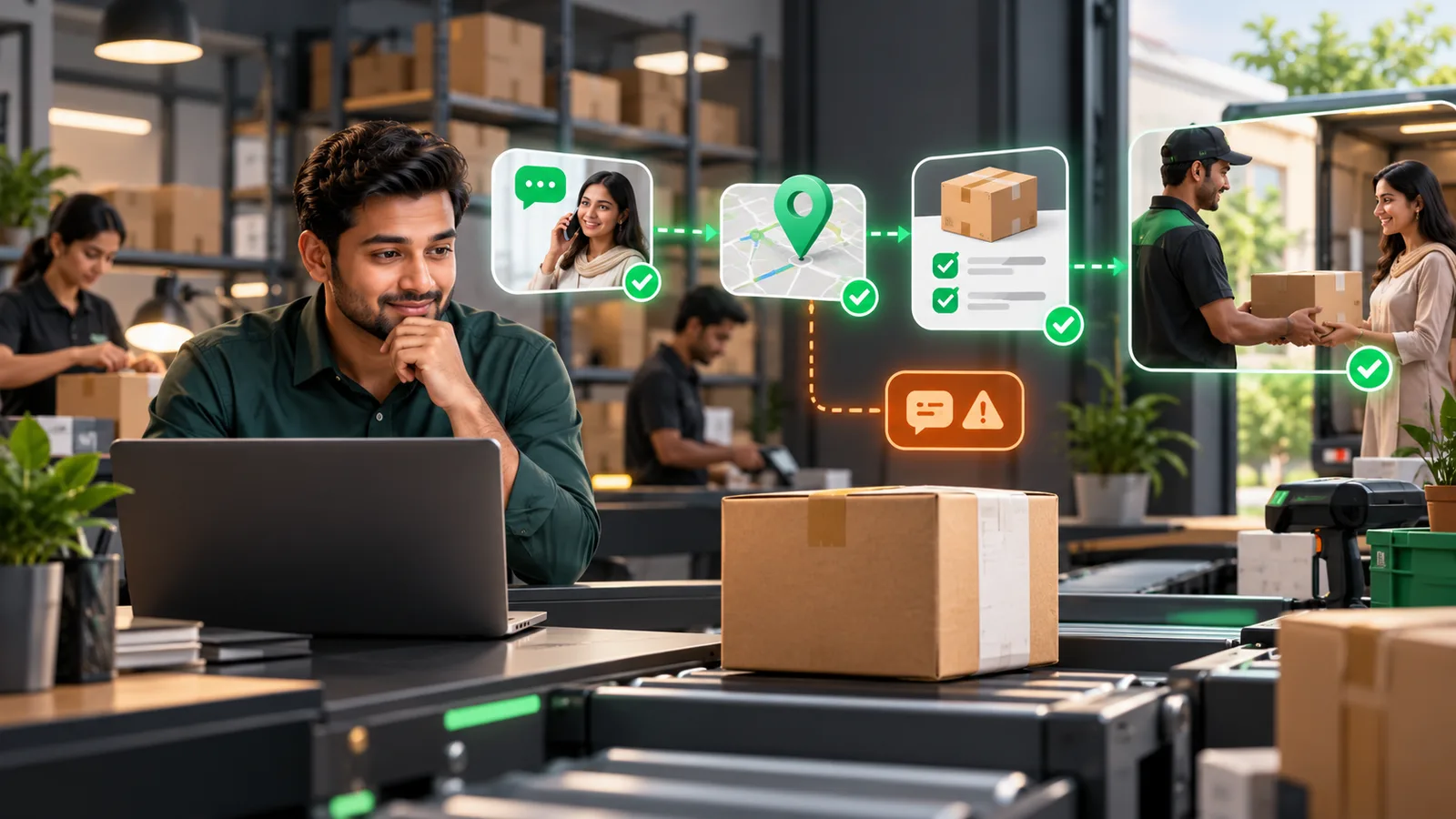
Do not force every customer through the same path. A better model is:
- Social content: creates awareness and demand.
- Messaging: answers questions and qualifies intent.
- Owned product or landing page: provides consistent details and the next action.
- Checkout or order form: captures structured order information.
- Human operations: verifies exceptions and manages fulfilment.
An AI receptionist can help between discovery and checkout by answering approved questions instantly and sending the right buyer to the right page.
Prepare product pages that can close the information gap
Before routing traffic to a product page, check that it answers the questions your inbox receives most often:
- What exactly is included?
- Which sizes, colors, or variants are available?
- What is the final price?
- Is delivery available in the customer’s area?
- What is the expected delivery window?
- Which payment methods are accepted?
- What happens if the item is damaged or does not fit?
Use original, accurate product images. Avoid claims that cannot be verified. A clear limitation builds more trust than an exaggerated promise.
Build a conversation-to-store handoff
When someone asks about a product in chat, the response should not be a generic homepage link. The ideal handoff includes:
- A concise answer to the customer’s question.
- A direct link to the relevant product or campaign page.
- A clear explanation of the next step.
- An option to speak with a person.
For example: confirm the available size, state the delivery estimate, then share the exact page where the buyer can review and order it.
Migrate gradually
You do not need to move every product and process on day one.
Phase 1: top sellers
Publish your best-selling products, delivery policy, and returns information. Keep existing manual confirmation while checking data quality.
Phase 2: structured campaigns
Send paid and organic campaign traffic to focused landing pages. Track which page, campaign, and conversation led to an order.
Phase 3: automate repeatable support
Train your AI receptionist on the approved catalog and policies. Create handoff rules for payment, complaints, custom orders, and uncertain answers.
Phase 4: improve fulfilment data
Standardize phone numbers and addresses, verify unusual orders, and connect the fulfilment process to the order record instead of copying data between inboxes.
Metrics that show whether the move is working
Track the whole funnel, not just store visits:
- social click to product-page visit;
- product-page visit to checkout start;
- checkout start to submitted order;
- conversation to qualified buyer;
- average support response time;
- incomplete or unreachable orders;
- delivery success and return rate;
- repeat purchase rate.
If traffic rises but completed orders do not, inspect page clarity, pricing, delivery expectations, and checkout friction before increasing ad spend.
Final takeaway
Social channels can remain your strongest discovery engine while an owned store becomes the reliable transaction layer. The transition works best when product data, automated answers, checkout expectations, and human operations all tell the same story.
That consistency—not simply having a website—is what makes an owned commerce channel valuable.