How AI Chatbots Handle Multiple Languages for Global Customer Support
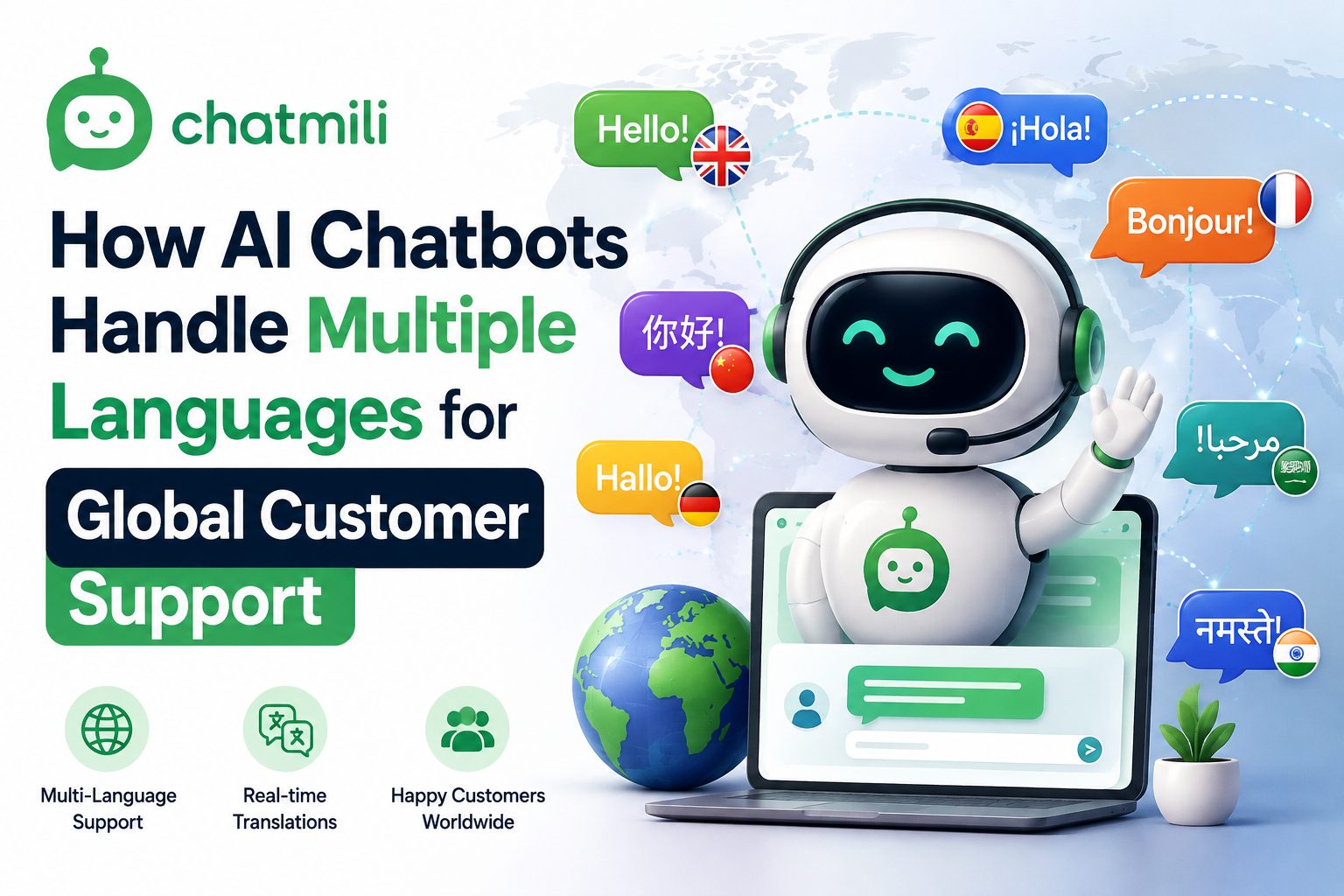
A business serving a mixed audience — different regions, different first languages — used to face a hard choice: hire staff fluent in every language your customers speak, or accept that some customers get a worse experience. AI chatbots have quietly removed that trade-off.
How an AI chatbot actually handles different languages
Modern AI language models aren't translating word-for-word behind the scenes — they genuinely understand and generate natural text in dozens of languages directly. In practice, this means a customer can message your AI receptionist in whichever language they're comfortable in, and get a reply in that same language, without you configuring anything language-specific for that conversation.
This is different from a traditional rule-based chatbot, which typically needs a separate script written and maintained for every language it supports. An AI-driven receptionist reads your knowledge base once — usually written in your primary language — and can still respond accurately to a customer asking in a different one.
Why this matters for growing businesses
- You stop losing customers to a language barrier. A customer who isn't fluent in your primary business language often simply gives up rather than struggle through a conversation — an AI that meets them in their own language keeps that conversation alive.
- You don't need to hire for language coverage. Instead of specifically recruiting bilingual or multilingual staff to cover every market you serve, one AI receptionist can competently handle the common ones.
- Consistency stays intact across languages. The AI draws from the same underlying knowledge base and policies regardless of which language a customer used to ask — no risk of the "English answer" and "Bengali answer" quietly drifting apart over time the way two separately-maintained scripts might.
Where this matters most
Businesses serving diverse or multi-region customer bases feel this most directly — e-commerce stores shipping across borders, service businesses in linguistically mixed cities, and any brand whose marketing reaches an audience wider than a single language group. Even a purely local business often has more linguistic diversity in its customer base than its own staff does.
Keeping your own team's experience separate
It's worth noting this is distinct from your team's dashboard language — the language a customer messages in, and the language your staff view the conversation dashboard in, are two independent things. A business owner can run their dashboard in one language while their AI fluently handles customer conversations in several others simultaneously.
Getting started
There's typically nothing extra to configure to enable this — it's largely a natural consequence of using a genuinely capable AI model rather than a scripted decision tree. The more important step is making sure your knowledge base covers the information customers need, since that's what the AI draws from regardless of the language someone asks in.
Curious what this looks like for your business? Read what an AI receptionist actually does or see ChatMili's plans.